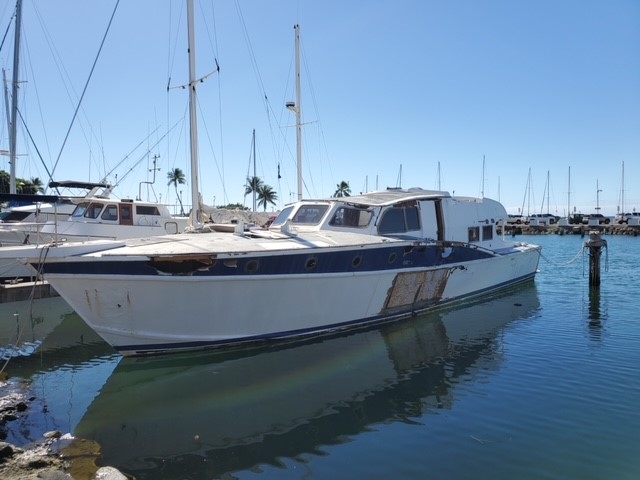
It’s been nearly forty-five years since Natalie Wood’s life was cut short in the cold dark waters off the Isthmus at Catalina Island during a yachting trip with her husband, Robert Wagner, one of the stars of TV drama Hart to Hart; her co-star in the movie Brainstorm, Christopher Walken and the young yacht captain, Dennis Davern. Forty-five years with no justice for Natalie.
The first “investigation” of her death in 1981 was a sham orchestrated by Sheriff Peter Pitchess, a faithful friend of Frank Sinatra, the entertainment icon who was closely aligned with the mob that controlled Hollywood for decades. Sinatra was a former lover of Natalie and his association with her made him a confidant of Robert Wagner.
The second “investigation” in 2011, called the “reopening” of the first investigation by the investigators in charge, was the product of Sheriff Lee Baca, who needed a distraction from the disastrous publicity of the federal criminal investigation into his arrogant illegal conduct. That investigation led to Baca’s felony conviction and prison sentence.
This Blog will provide a forum for discussion of what happened; what didn’t happen; what’s speculation, and the validity of statements from those close to the case, like Walken’s persistent claim that he was “asleep when it happened” and Wagner’s claim that Natalie’s death was an accident brought about by her attempt to silence a “banging dinghy.”
This Blog will also provide information and a forum about my five-year, and counting, campaign to get the Los Angeles County DA to request a public jury Inquest of Natalie’s death by the Los Angeles County Medical Examiner/Coroner to produce an unbiased and uncompromised finding of whether Natalie’s death was an accident or death at the hands of another (homicide), and why this option remains viable notwithstanding prime suspect Robert Wagner’s age.
Why have I persued this? Let me explain.
While the statute of limitations never expires on a murder case, Natalie’s case is not your typical murder case. In a typical case the evidence is not completely circumstantial. In Natalie’s case, it is. Because of that, time erodes a prosecutor’s ability to legally prove facts in a criminal trial. That is not so in an Inquest.
Criminal charges in Natalie’s case are no longer feasible, without a full confession, because of the death or infirmity of so many material witnesses, like the three pathologists who performed Natalie’s autopsy, Mart Crowley, Natalie’s longtime friend and the Sheriff’s first responder on Catalina Island, Deputy Bill Kroll, who diligently worked the scene of Natalie’s death and the yacht, Splendour, and prepared a report detailing his preliminary findings before the fix was in.
Without those witnesses a criminal trial would be unworkable because their reports would be inadmissible in a court of law. But an Inquest is a different animal than a criminal trial. At an inquest, a jury would be able to see and consider reports, records, depositions, and live testimony. That is, anything that is germane to a determination of accident versus homicide. The Inquest jury does not find guilt, so the burden of proof and rules of evidence that govern criminal trials is not applicable to an Inquest.
To answer questions, this Blog will explore my five-year investigation of Natalie’s death as a competent prosecutor would if this were a normal investigation and celebrity wasn’t a factor. The results of my investigation are contained within by book brainstorm: An Investigation of the Mysterious Death of Film Star Natalie Wood published by Post Hill Press in 2021. My book was specifically written for those who were interested in determining for themselves whether Natalie Wood’s death was an accident or murder.
Finally, this Blog will reveal, for the first time, some of the reasons why the authorities in a position to do something about Natalie’s case are, and have been, doing nothing in the face of probing and convincing evidence suggesting murder was the cause of Natalie’s death.